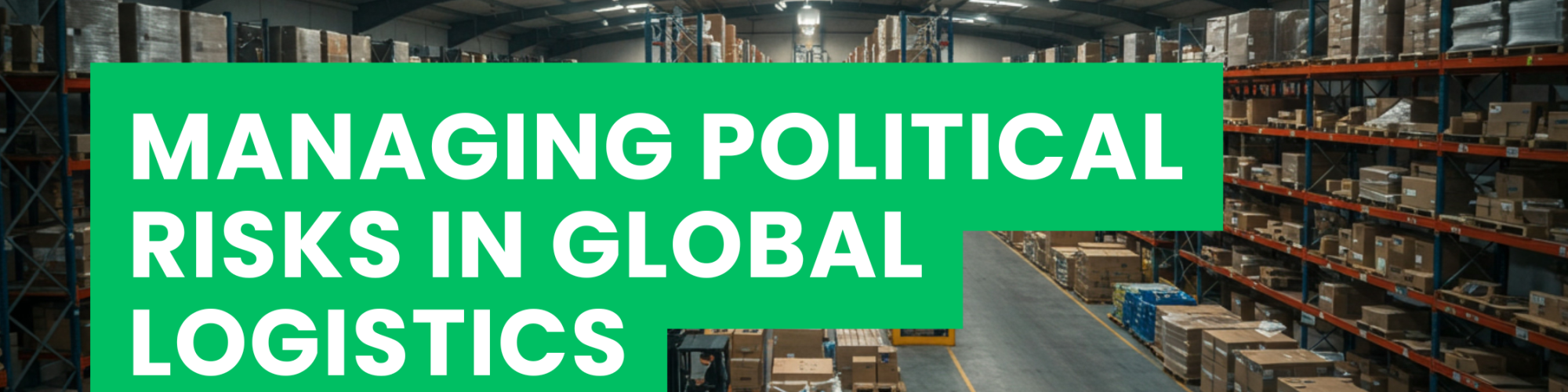
Global trade has never been more interconnected — or more vulnerable to political disruption. For importers, exporters, and multinational businesses, political instability can halt shipments, inflate costs, disrupt supply chains, and threaten long-term growth.
From sudden tariff changes and sanctions to civil unrest, regulatory shifts, and border restrictions, political risk has become one of the most critical variables in global logistics management.
For organizations operating across continents, managing political risks is not optional. It is a strategic necessity.
At ASL Logistics, we work with businesses worldwide to design resilient, compliant, and adaptive supply chain strategies. In this comprehensive guide, we explore what political risk means in global logistics, how it impacts international trade, and the proven strategies businesses can use to protect their operations.
Understanding Political Risk in Global Logistics
Political risk refers to the possibility that political events, decisions, or instability in a country may negatively affect business operations.
In global logistics, this can include:
- Sudden changes in import/export regulations
- Trade embargoes and sanctions
- Tariff increases
- Border closures
- Civil unrest or strikes
- Government policy shifts
- Currency controls
- Nationalization of industries
These disruptions often occur with little warning and can affect:
- Transit times
- Freight costs
- Customs clearance
- Inventory availability
- Contract obligations
- Insurance claims
Political risk does not only impact companies operating in high-conflict regions. Even stable economies can introduce regulatory changes that affect supply chains overnight.
Why Political Risk Is a Growing Concern
Global supply chains are more complex than ever. Businesses rely on:
- Multi-country sourcing
- Just-in-time inventory
- Cross-border manufacturing
- Integrated technology systems
- Interdependent logistics networks
When a political event disrupts one node in the supply chain, ripple effects can spread across multiple regions.
In recent years, businesses have faced:
- Rapid tariff escalations
- Sanctions affecting entire sectors
- Airspace closures
- Port congestion due to geopolitical tensions
- Trade policy reversals
- Increased customs scrutiny
These realities demand a proactive, structured approach to political risk management.
Key Types of Political Risks in International Logistics
1. Trade Policy Changes
Governments can alter tariffs, quotas, or trade agreements without long transition periods. These changes can:
- Increase landed costs
- Render contracts unprofitable
- Delay shipments pending regulatory clarification
- Force supplier shifts
For example, a sudden tariff increase on electronic components can disrupt production for manufacturers dependent on overseas suppliers.
2. Sanctions and Embargoes
Sanctions can prohibit trade with specific countries, companies, or individuals. Violating sanctions can result in:
- Severe financial penalties
- Shipment seizures
- Loss of trade licenses
- Reputational damage
Businesses must ensure strict compliance screening across all shipments and counterparties.
3. Political Instability and Civil Unrest
Protests, government transitions, or regional conflicts can:
- Shut down ports and airports
- Delay customs operations
- Interrupt transportation networks
- Damage cargo or infrastructure
Even short-term instability can create weeks of backlog in global logistics chains.
4. Regulatory and Compliance Changes
Governments frequently update:
- Customs documentation requirements
- Import licensing rules
- Product certification standards
- Environmental regulations
Failure to adapt quickly can result in cargo holds, penalties, or denied entry.
5. Currency Controls and Financial Restrictions
Some countries impose currency conversion restrictions or limit foreign currency transactions. These controls can:
- Delay supplier payments
- Increase financial exposure
- Complicate international contracts
Logistics providers must coordinate closely with finance teams to manage these constraints.
The Business Impact of Political Risk
Political disruptions affect more than shipping schedules. They directly impact financial performance and strategic growth.
Increased Operational Costs
Unexpected duties, rerouting, demurrage, warehousing, and compliance costs can rapidly erode margins.
Supply Chain Disruption
Production lines can stop if critical components are delayed. Inventory shortages damage customer trust.
Contractual Liabilities
Late deliveries may trigger penalties or breach-of-contract claims.
Reputational Risk
Customers expect reliability. Persistent disruptions without contingency planning can damage long-term relationships.
Compliance Exposure
Regulatory violations, even unintentional ones, can lead to severe penalties.
For businesses operating globally, unmanaged political risk can escalate quickly from operational inconvenience to strategic crisis.
Strategic Approaches to Managing Political Risks
Managing political risk requires structured planning, expert oversight, and agile execution. Below are proven strategies used by resilient global organizations.
1. Diversify Sourcing and Supply Chains
Overreliance on a single country or supplier significantly increases exposure.
Businesses should:
- Develop alternative sourcing regions
- Qualify secondary suppliers
- Establish multi-country production options
- Avoid concentration risk in politically volatile areas
Supply chain diversification reduces dependency and ensures continuity during disruptions.
2. Implement Scenario Planning and Risk Mapping
Proactive organizations conduct risk mapping across all supply chain nodes.
This includes:
- Identifying high-risk countries
- Assessing political stability trends
- Evaluating regulatory unpredictability
- Analyzing trade relationships between key markets
Scenario planning allows companies to simulate potential disruptions and prepare contingency plans in advance.
3. Strengthen Customs and Compliance Management
Political risk often manifests through regulatory change.
Strong customs brokerage expertise ensures:
- Accurate classification and documentation
- Up-to-date compliance with trade regulations
- Real-time monitoring of sanctions updates
- Reduced likelihood of cargo holds
Experienced customs professionals play a critical role in protecting global shipments.
4. Build Flexible Logistics Networks
Rigid routing structures increase vulnerability.
Flexible networks include:
- Multiple port options
- Alternative carriers
- Regional warehousing hubs
- Air, sea, and land modal flexibility
If one route closes due to political events, shipments can be rerouted efficiently.
5. Invest in Real-Time Visibility
Technology-driven visibility systems enable:
- Live shipment tracking
- Early disruption alerts
- Data-driven rerouting decisions
- Predictive risk modeling
Without visibility, companies react too late. With data intelligence, they act early.
6. Secure Political Risk Insurance
Insurance products can protect against:
- Expropriation
- Currency inconvertibility
- Political violence
- Government contract frustration
While insurance does not eliminate operational disruption, it reduces financial exposure.
7. Develop Strong Local Partnerships
Local expertise is invaluable in politically complex environments.
Trusted logistics partners provide:
- On-the-ground intelligence
- Regulatory updates
- Government liaison support
- Rapid response during disruptions
Global reach combined with local knowledge strengthens resilience.
8. Maintain Strategic Inventory Buffers
Just-in-time models reduce holding costs but increase vulnerability during political disruptions.
Strategic safety stock in critical regions can:
- Prevent production shutdowns
- Maintain customer fulfillment
- Buy time during route adjustments
Inventory strategy should align with political risk exposure.
9. Monitor Geopolitical Developments Continuously
Political risk management is not a one-time assessment. It requires continuous monitoring.
Key areas to track include:
- Election cycles
- Trade negotiations
- Diplomatic tensions
- Policy reform announcements
- Regulatory consultations
Regular updates enable early intervention.
10. Align Procurement, Legal, and Logistics Teams
Political risk spans multiple business functions.
Integrated coordination ensures:
- Contract clauses reflect force majeure realities
- Procurement strategies consider geopolitical risk
- Logistics teams receive early alerts on policy changes
- Finance teams prepare for currency fluctuations
Siloed departments increase vulnerability. Collaboration enhances protection.
Building a Politically Resilient Supply Chain Framework
A structured political risk framework should include:
- Risk identification
- Risk assessment
- Risk mitigation strategy
- Contingency planning
- Continuous monitoring
- Performance review
This structured approach transforms political risk management from reactive firefighting into proactive strategy.
How ASL Logistics Supports Political Risk Management
Managing political risk requires global expertise, operational agility, and regulatory depth.
ASL Logistics supports clients through:
Global Freight Forwarding with Route Flexibility
We design multi-route transportation strategies across air, ocean, and land networks to minimize exposure to regional instability.
Advanced Customs Brokerage and Compliance
Our specialists monitor regulatory changes and sanctions developments to ensure compliant, seamless clearance.
End-to-End Supply Chain Solutions
From sourcing to final delivery, we help businesses structure diversified and resilient logistics frameworks.
Risk Monitoring and Advisory
We provide ongoing risk insights, route assessments, and strategic planning to help clients adapt quickly.
Strategic Warehousing and Distribution
Regional warehousing options enable buffer inventory and alternative fulfillment strategies during disruptions.
Strong Global Partner Network
Our international presence ensures local intelligence and operational agility across key markets.
Practical Example: Managing Sudden Trade Restrictions
Consider a scenario where a country unexpectedly increases tariffs on imported machinery components.
Without preparation:
- Costs surge overnight
- Production budgets collapse
- Contracts become unsustainable
- Delays increase
With structured risk management:
- Alternative sourcing regions activate
- Customs classification optimization reduces exposure
- Shipments reroute through compliant trade agreements
- Inventory buffers prevent production stoppage
The difference lies in preparation and expert coordination.
Political Risk Is Now a Core Supply Chain Metric
Businesses once viewed political disruption as rare. Today, it is constant.
Successful global organizations treat political risk as a measurable KPI alongside:
- Freight cost
- Transit time
- Inventory turnover
- Supplier performance
Risk-adjusted supply chain design is no longer optional. It defines competitive advantage.
The Competitive Advantage of Proactive Risk Management
Organizations that invest in structured political risk management benefit from:
- Faster recovery during disruptions
- Reduced financial losses
- Stronger customer trust
- Improved contract performance
- Enhanced regulatory compliance
- Long-term strategic stability
While competitors react to crises, resilient businesses continue delivering.
Leadership Responsibility in Political Risk Strategy
Political risk management requires executive oversight.
Leaders must:
- Allocate resources for risk analysis
- Empower logistics and compliance teams
- Support diversification strategies
- Encourage data-driven decision-making
- Invest in strategic partnerships
Global trade success depends on informed, forward-looking leadership.
Final Thoughts: Resilience Is a Strategic Choice
Political volatility will remain a defining feature of global trade. Businesses cannot control geopolitical events, but they can control how prepared they are.
Resilient supply chains are not built during crises. They are built before them.
Managing political risks in global logistics requires:
- Experience
- Global visibility
- Regulatory expertise
- Strong partnerships
- Flexible infrastructure
- Continuous monitoring
ASL Logistics partners with importers, exporters, supply chain managers, and international trade professionals to build adaptive, compliant, and future-ready logistics networks.
If your organization operates across borders and seeks to strengthen resilience against political uncertainty, connect with ASL Logistics today for customized global logistics solutions designed to protect your supply chain and support sustainable growth.