
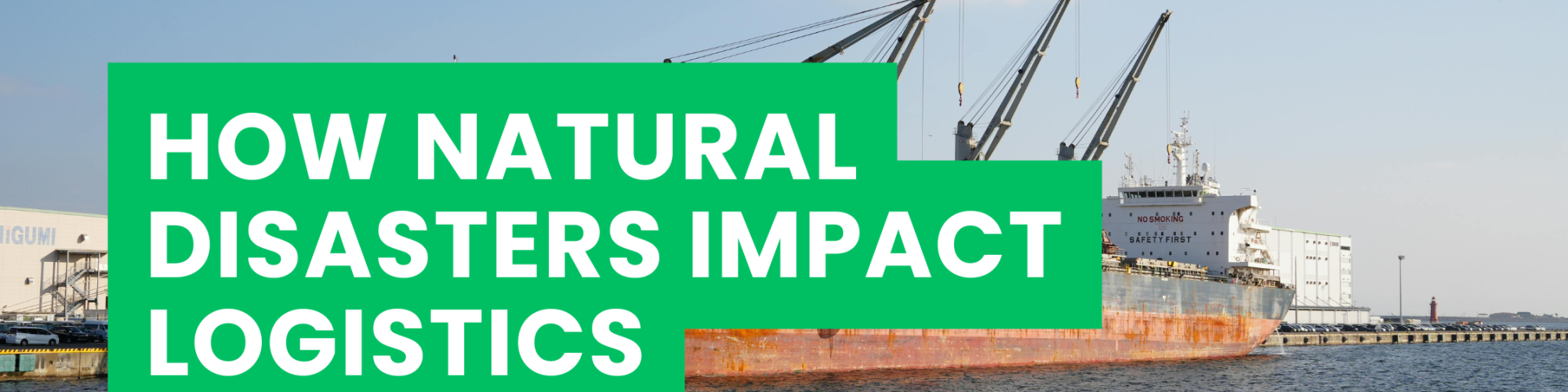
Global supply chains are designed for efficiency. They are built on precision timing, optimized routes, lean inventories, and interconnected networks that stretch across continents. But when natural disasters strike, that precision is tested.
Earthquakes, hurricanes, floods, wildfires, typhoons, and extreme weather events can disrupt transportation, damage infrastructure, halt production, and create regulatory bottlenecks. For importers, exporters, supply chain managers, and procurement leaders, the consequences can be immediate and costly.
Understanding how natural disasters impact logistics is no longer optional. It is a strategic necessity.
At ASL Logistics, we work closely with global businesses to build resilient, adaptive supply chains that withstand disruption. This article explores how natural disasters affect logistics, what risks they create, and how companies can prepare and respond effectively.
The Growing Frequency of Natural Disasters
Natural disasters are increasing in both frequency and intensity. Climate shifts and environmental changes have amplified extreme weather patterns across many regions. Flood-prone areas are experiencing heavier rainfall. Coastal zones are seeing stronger storms. Wildfires are expanding into industrial and transportation corridors.
For global logistics operations, this means disruption is not a rare exception. It is an operational risk that must be planned for.
The challenge is not only the disaster itself. It is the cascading impact that follows across ports, airports, highways, warehouses, suppliers, and customs checkpoints.
Direct Impacts on Transportation Networks
Transportation is the backbone of global trade. When natural disasters hit, the first visible damage often occurs in transport infrastructure.
1. Port Closures and Congestion
Hurricanes, typhoons, and tsunamis can shut down seaports for days or weeks. High winds, flooding, and damaged cranes make operations unsafe. Even after reopening, congestion builds quickly as vessels queue for berths.
Delays at a single major port can disrupt entire regional supply chains. Containers may sit idle, demurrage charges accumulate, and delivery schedules collapse.
2. Airport Disruptions
Air freight is critical for high-value, time-sensitive, and perishable goods. Severe storms, volcanic ash, heavy snowfall, or runway flooding can ground flights and suspend cargo handling.
For businesses relying on just-in-time delivery, even a 24-hour disruption can halt production lines.
3. Road and Rail Damage
Flooded highways, collapsed bridges, landslides, and damaged rail tracks restrict inland transport. Even if ports and airports are operational, cargo may not reach distribution centers or final destinations.
In many regions, road transport is the last-mile connector. When it fails, supply chains stall.
Manufacturing and Supplier Disruptions
Logistics does not begin at the port. It starts at the source.
Natural disasters frequently impact manufacturing hubs. Industrial zones are often located near coastal areas for port access, which increases vulnerability to hurricanes and flooding.
When factories shut down:
- Production stops
- Raw materials remain unused
- Orders are delayed
- Backlogs accumulate
For global companies sourcing from a single geographic cluster, this can create significant exposure.
A single disrupted supplier can affect dozens of downstream businesses across multiple countries.
Warehouse and Inventory Risks
Warehousing facilities are critical nodes in the supply chain. Natural disasters can:
- Damage stored inventory
- Destroy packaging materials
- Interrupt cold chain systems
- Disable warehouse management systems
- Cause power outages
Flooding and fires are especially destructive. Even if the building remains structurally intact, water damage can render goods unusable.
For temperature-sensitive cargo such as pharmaceuticals or food products, power loss can lead to complete inventory loss.
Customs and Regulatory Delays
In the aftermath of natural disasters, customs operations may slow down due to:
- Reduced staffing
- Damaged government facilities
- System outages
- Emergency regulatory measures
Authorities may implement temporary restrictions, revised inspection procedures, or emergency import/export controls.
This can create uncertainty for businesses attempting to move goods through affected regions.
Experienced customs brokerage support becomes essential during such times to navigate changing regulations and minimize delays.
Ripple Effects Across Global Supply Chains
One of the most underestimated impacts of natural disasters is the ripple effect.
Modern supply chains are interconnected. A disruption in one region can affect production schedules thousands of miles away.
For example:
- A flooded semiconductor plant can delay electronics manufacturing globally.
- A closed port in one country can redirect cargo to neighboring ports, creating congestion there.
- A halted chemical supplier can disrupt multiple industries simultaneously.
These secondary effects often last longer than the initial disaster.
Businesses that lack supply chain visibility may not realize the full extent of the disruption until orders are already delayed.
Financial Consequences for Businesses
The financial impact of natural disasters on logistics is substantial.
Increased Transportation Costs
When standard routes are unavailable, alternative routing becomes necessary. This may involve:
- Air freight instead of sea freight
- Longer inland transport routes
- Premium vessel space
- Expedited handling services
All of these increase costs.
Storage and Demurrage Charges
Port congestion and delayed pickup can lead to:
- Demurrage fees
- Detention charges
- Extended warehousing costs
These unplanned expenses erode profit margins.
Production Downtime
For manufacturers operating on lean inventory models, supply disruption can halt production. Idle production lines translate directly into revenue loss.
Impact on Time-Critical and Perishable Shipments
Certain industries are particularly vulnerable.
Pharmaceuticals and Healthcare
Medical supplies often require strict temperature control and precise delivery schedules. Disruption can compromise product integrity and patient care.
Food and Agriculture
Perishable goods have limited shelf life. Transportation delays can result in spoilage and waste.
Automotive and High-Tech Manufacturing
These industries depend on synchronized component delivery. A single missing part can stop an entire assembly line.
For these sectors, proactive logistics planning is essential.
Insurance and Risk Allocation Challenges
Natural disasters also complicate insurance claims and liability allocation.
Questions often arise:
- Who bears the financial responsibility for damaged cargo?
- Does force majeure apply?
- Are suppliers protected under contract?
- Is the cargo fully insured against environmental risk?
Without clear contractual terms and proper cargo insurance coverage, businesses may face unexpected losses.
Professional logistics partners assist clients in structuring shipments with appropriate coverage and clear documentation.
The Role of Supply Chain Visibility
Visibility is one of the most powerful tools in managing disaster-related disruptions.
Real-time tracking, digital documentation, and centralized communication platforms allow businesses to:
- Monitor cargo location
- Anticipate delays
- Adjust routing strategies
- Inform customers proactively
Without visibility, companies react too late.
With visibility, they make informed decisions quickly.
Strategies to Mitigate the Impact of Natural Disasters
While natural disasters cannot be prevented, their impact can be reduced through strategic planning.
1. Diversified Sourcing
Relying on a single geographic region for sourcing increases vulnerability. Multi-region sourcing reduces risk exposure.
Businesses should evaluate supplier concentration and develop alternative sourcing strategies.
2. Flexible Transportation Planning
Pre-approved alternative routes and carriers allow rapid response when primary routes are compromised.
Having established relationships with multiple carriers and freight options enhances agility.
3. Strategic Inventory Buffers
Lean inventory models maximize efficiency but reduce resilience. Maintaining strategic safety stock for critical components can prevent production shutdowns.
4. Risk Assessment and Scenario Planning
Regular supply chain risk assessments identify:
- Geographic vulnerabilities
- Infrastructure dependencies
- Seasonal disaster risks
Scenario planning enables companies to prepare response strategies before disruption occurs.
5. Strong Customs and Regulatory Expertise
During disaster situations, regulatory changes can occur rapidly. Partnering with experienced customs brokerage professionals ensures compliance and reduces clearance delays.
The Importance of a Resilient Logistics Partner
In times of disruption, the difference between delay and continuity often depends on logistics expertise.
A capable logistics partner provides:
- Real-time shipment monitoring
- Alternative routing solutions
- Carrier negotiation support
- Customs guidance
- Emergency air and sea freight arrangements
- Transparent communication
Experience matters. Established global networks matter. Strong local partnerships matter.
Businesses that work with proactive logistics providers recover faster and maintain customer trust.
Technology as a Resilience Enabler
Digital transformation has improved supply chain resilience.
Modern logistics technology supports:
- Predictive risk modeling
- Automated alerts
- Shipment tracking dashboards
- Integrated communication systems
- Data-driven decision-making
By combining technology with operational expertise, businesses can anticipate disruption rather than simply react to it.
Long-Term Strategic Shifts in Global Logistics
Natural disasters are influencing long-term supply chain strategy.
Many companies are now:
- Nearshoring or reshoring critical production
- Investing in regional distribution hubs
- Building dual-sourcing frameworks
- Strengthening supplier risk audits
- Prioritizing resilience over cost alone
Efficiency remains important. But resilience is now equally critical.
Supply chain strategy must balance cost optimization with risk mitigation.
Building Organizational Preparedness
Resilience is not only about logistics. It is about organizational readiness.
Companies should:
- Develop disaster response teams
- Establish communication protocols
- Train staff on contingency plans
- Conduct regular supply chain stress tests
Prepared organizations respond faster and reduce operational downtime.
Lessons Learned from Past Disruptions
History has demonstrated that natural disasters can expose hidden weaknesses in supply chains.
Common lessons include:
- Overdependence on single sourcing increases risk
- Lack of visibility delays response
- Poor communication damages customer relationships
- Unclear insurance coverage creates financial exposure
Companies that learn from disruption emerge stronger.
Why Natural Disaster Preparedness Is Now a Competitive Advantage
Customers expect reliability. Markets demand continuity.
Businesses that maintain supply stability during disruption gain competitive advantage. They retain customer confidence and strengthen brand reputation.
Conversely, repeated supply failures damage trust and long-term relationships.
Resilience is not only risk management. It is a business differentiator.
How ASL Logistics Supports Clients During Natural Disruptions
At ASL Logistics, we understand that disruption is part of global trade. Our role is to minimize its impact and protect our clients’ supply chains.
We provide:
- Comprehensive international freight forwarding solutions
- Flexible sea, air, and multimodal transport options
- Customs brokerage expertise across global markets
- Real-time shipment visibility
- Risk-aware route planning
- Strategic supply chain consulting
Our global network and local operational knowledge allow us to respond quickly when conditions change.
We work closely with importers, exporters, procurement teams, and supply chain leaders to build adaptable logistics frameworks that withstand uncertainty.
Our approach is proactive, not reactive.
Final Thoughts
Natural disasters will continue to shape global logistics. Infrastructure may be damaged. Routes may be blocked. Production may slow. But with strategic planning, diversified sourcing, supply chain visibility, and strong logistics partnerships, businesses can reduce exposure and recover faster.
Resilient supply chains are not built during a crisis. They are built before one.
For importers, exporters, and international trade professionals, preparedness is no longer optional. It is essential.
If your organization is looking to strengthen supply chain resilience and safeguard operations against natural disruptions, connect with ASL Logistics. Our team is ready to design customized global logistics solutions that keep your business moving, no matter the challenge.