
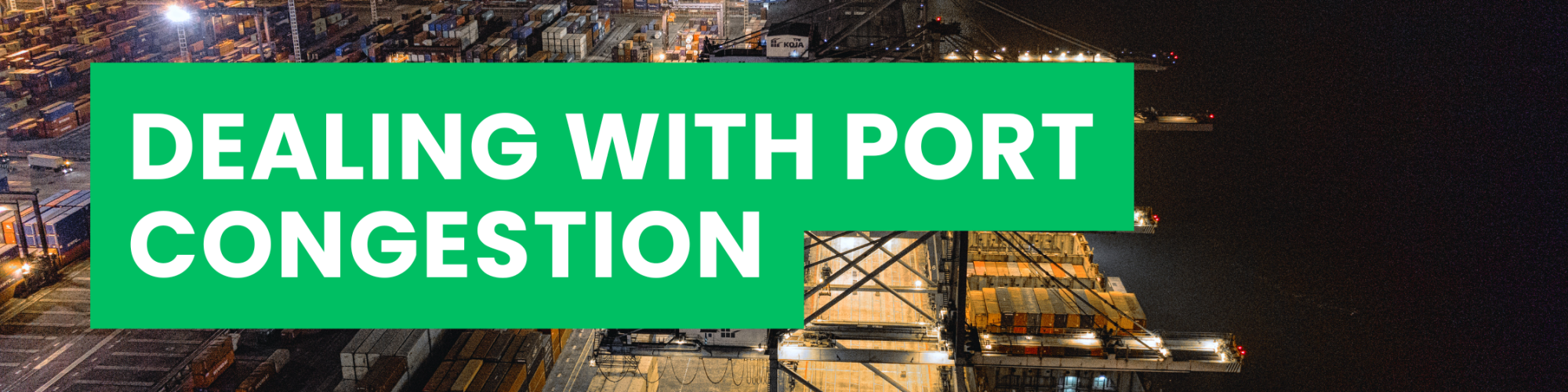
Port congestion has become one of the most persistent and complex challenges in global trade. For importers, exporters, and supply chain leaders, congestion is not just an operational inconvenience—it directly impacts cost structures, delivery reliability, customer commitments, and overall business performance.
As global trade volumes fluctuate and shipping networks evolve, the ability to manage port congestion effectively has become a defining factor in supply chain resilience.
At ASL Logistics, port congestion is addressed through structured planning, global carrier coordination, multi-modal flexibility, and deep customs expertise. Understanding the causes, consequences, and mitigation strategies behind port congestion allows businesses to maintain control even in volatile trade environments.
What Is Port Congestion?
Port congestion occurs when cargo volumes exceed a port’s handling capacity. This imbalance leads to vessel queues, container backlogs, yard overcrowding, and extended dwell times.
Congestion may appear as:
- Ships waiting offshore for berthing slots
- Containers sitting at terminals beyond free time
- Limited truck appointment availability
- Rail delays due to equipment shortages
- Extended customs clearance timelines
While congestion can be temporary, its ripple effects often extend across global supply chains for weeks or months.
Primary Causes of Port Congestion
Port congestion rarely stems from a single factor. It is usually the result of overlapping operational, economic, and regulatory conditions.
1. Surges in Cargo Volume
Sudden increases in import or export activity—driven by seasonal demand, economic stimulus, or shifting trade patterns—can overwhelm port infrastructure.
Peak seasons often amplify this pressure, particularly for retail, electronics, and consumer goods sectors.
2. Vessel Schedule Disruptions
When shipping lines experience delays in one region, the disruption cascades across subsequent port calls. Late vessel arrivals compress terminal handling windows and reduce operational efficiency.
Blank sailings, schedule changes, and port omissions further complicate planning.
3. Labor Constraints
Port operations depend heavily on skilled labor. Labor shortages, strikes, or productivity slowdowns can significantly reduce throughput capacity.
Even minor reductions in crane productivity can lead to substantial vessel queues.
4. Equipment Imbalances
Container shortages, chassis limitations, and railcar constraints restrict cargo movement beyond the terminal. When containers cannot exit quickly, yard congestion intensifies.
Equipment repositioning delays often exacerbate congestion in import-heavy regions.
5. Inland Transportation Bottlenecks
Ports function as part of a broader logistics ecosystem. When trucking networks, rail corridors, or distribution centers face capacity limitations, container evacuation slows.
This creates yard overcrowding, preventing new vessels from discharging cargo efficiently.
6. Regulatory and Inspection Delays
Increased customs inspections, documentation errors, or compliance audits can extend cargo dwell times. When containers remain uncleared, they occupy valuable terminal space.
Efficient customs brokerage becomes critical in minimizing administrative delays.
The Financial Impact of Port Congestion
Port congestion significantly increases logistics costs. Businesses often underestimate the cumulative financial burden.
Direct Costs
- Demurrage and detention charges
- Port storage fees
- Container repositioning expenses
- Emergency trucking premiums
- Air freight conversions
Indirect Costs
- Production delays
- Inventory stockouts
- Missed sales opportunities
- Contractual penalties
- Reputational damage
For procurement heads and finance teams, congestion-related expenses can erode margins quickly.
Operational Consequences Across Supply Chains
Port congestion disrupts more than just ocean freight schedules. Its impact spreads across multiple operational layers.
Inventory Imbalances
Delayed inbound shipments create shortages at manufacturing facilities and distribution centers. Meanwhile, outbound goods may accumulate at origin due to vessel delays.
Production Interruptions
Industries operating under just-in-time models—such as automotive, electronics, and industrial manufacturing—are particularly vulnerable. A delayed container of components can halt entire assembly lines.
Extended Lead Times
Congestion makes transit time forecasting unreliable. Businesses struggle to provide accurate delivery commitments to customers.
Increased Working Capital
Longer cargo dwell times tie up capital in transit inventory. Businesses must often increase safety stock to offset uncertainty.
High-Risk Industries During Congestion
While all sectors are affected, certain industries experience heightened exposure.
Retail and Consumer Goods
Seasonal cycles amplify risk. Missed peak sales windows cannot be recovered.
Technology and Electronics
Product life cycles are short. Delays reduce product relevance and market competitiveness.
Pharmaceuticals
Temperature-controlled shipments face compliance risks if port dwell times extend.
Industrial Equipment
Project cargo delays can impact infrastructure timelines and contractual obligations.
Understanding industry-specific vulnerabilities is essential when designing congestion mitigation strategies.
Strategic Approaches to Dealing with Port Congestion
Managing congestion requires proactive planning rather than reactive problem-solving.
1. Diversified Port Strategy
Relying on a single gateway increases vulnerability. Evaluating alternative ports provides routing flexibility when congestion intensifies.
Diversification may involve secondary ports, inland container depots, or regional transshipment hubs.
2. Advanced Booking and Forecasting
Early space bookings and accurate volume forecasting help secure vessel allocations during peak periods.
Strong carrier relationships improve flexibility when schedules shift.
3. Multi-Modal Transportation Integration
Combining ocean, air, rail, and road solutions enables dynamic adjustments. When port delays escalate, partial air freight or rail diversions may protect critical shipments.
4. Inland Pre-Clearance and Efficient Customs Brokerage
Reducing customs clearance time shortens container dwell periods.
Accurate documentation, proactive compliance checks, and digital filing systems accelerate cargo release and reduce inspection risk.
5. Strategic Warehousing Near Gateways
Positioning inventory near major trade corridors allows faster response to delays. Temporary storage solutions can relieve terminal congestion while maintaining supply continuity.
6. Real-Time Visibility and Data Analytics
Modern tracking platforms provide early warning indicators of congestion risks. Visibility tools support:
- Estimated time of arrival updates
- Dwell time analysis
- Yard utilization monitoring
- Predictive delay modeling
Data-driven decisions minimize uncertainty.
The Role of Strong Carrier and Port Relationships
Effective congestion management depends on collaboration.
Established relationships with shipping lines, terminal operators, and inland carriers create:
- Priority space allocation opportunities
- Flexible container release options
- Early operational updates
- Faster issue resolution
Strategic partnerships enhance responsiveness during peak congestion periods.
Communication as a Competitive Advantage
When congestion occurs, transparent communication is critical.
Best practices include:
- Proactive client updates
- Revised delivery timelines
- Alternative routing proposals
- Clear cost impact assessments
Businesses that communicate early and accurately preserve customer trust even during disruptions.
Technology and Digital Coordination
Digital platforms enable centralized supply chain management.
Integrated systems support:
- Automated booking management
- Electronic documentation submission
- Control tower oversight
- Predictive analytics for peak congestion forecasting
Technology enhances agility, but it must be paired with experienced logistics professionals who can interpret data and execute practical solutions.
Long-Term Planning for Congestion Resilience
Port congestion is not a temporary anomaly. It is a structural reality of global trade.
Forward-looking businesses invest in:
- Scenario-based contingency planning
- Supplier diversification
- Contract flexibility
- Inventory optimization models
- Regular risk audits
Congestion resilience should be embedded into procurement and logistics strategies—not treated as an occasional crisis response.
Leadership Perspective: Turning Disruption into Stability
Organizations that anticipate congestion outperform competitors that react too late.
Proactive congestion management delivers:
- Predictable supply continuity
- Reduced emergency freight costs
- Stronger client relationships
- Improved financial forecasting
The ability to maintain operational stability during congested conditions becomes a competitive differentiator.
Why Partnering with an Experienced Global Logistics Provider Matters
Dealing with port congestion requires global visibility, regulatory expertise, and operational flexibility.
A comprehensive logistics partner provides:
- International freight forwarding solutions
- Multi-modal transport coordination
- Customs brokerage expertise
- Supply chain risk assessment
- Real-time shipment monitoring
- Strategic routing alternatives
At ASL Logistics, congestion management is approached systematically. Through global carrier networks, proactive planning, customs expertise, and integrated supply chain coordination, disruptions are managed before they escalate.
Port congestion will continue to challenge global trade. The difference lies in preparation, agility, and partnership.
If your organization is seeking reliable, customized global logistics solutions designed to withstand congestion and maintain supply chain continuity, connect with ASL Logistics today. Our team will work with you to design resilient strategies that protect your operations, control costs, and strengthen long-term trade performance.