
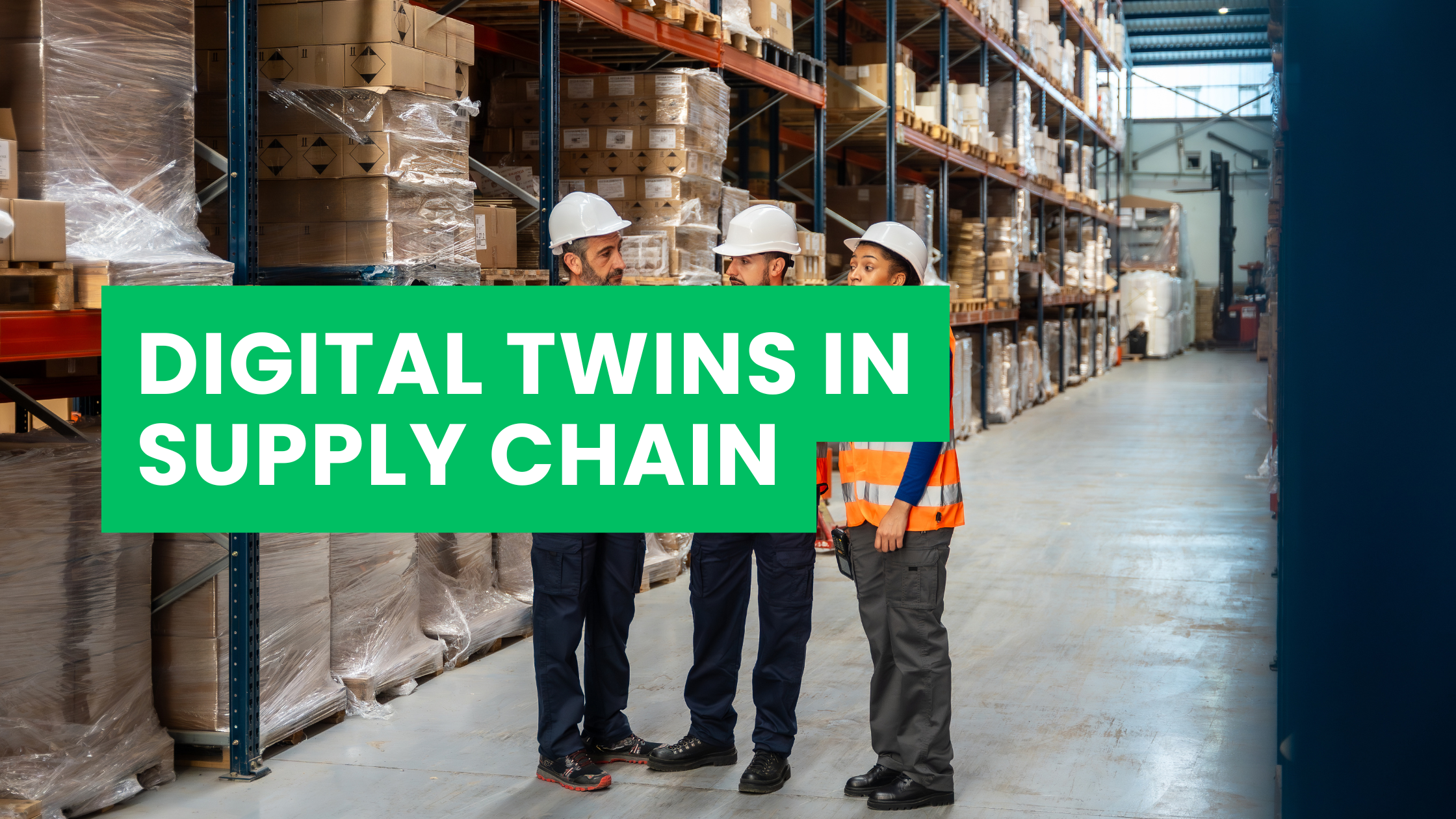
In today’s interconnected global economy, supply chains are under constant pressure to become faster, smarter, more resilient, and more transparent. Importers, exporters, and international trade professionals face rising complexity driven by geopolitical shifts, regulatory changes, fluctuating demand, and increasing customer expectations. In this environment, traditional supply chain models—largely reactive and fragmented—are no longer enough. This is where digital twins in supply chain management are transforming how businesses plan, operate, and optimize global logistics networks. At ASL Logistics, digital innovation is not viewed as a trend but as a strategic enabler of smarter international trade, better risk management, and stronger operational control. This article explores what digital twins are, how they work in supply chains, and why they are becoming essential for modern global logistics strategies. What Is a Digital Twin in the Supply Chain? A digital twin is a dynamic, data-driven virtual replica of a physical asset, process, or entire system. In supply chain management, a digital twin mirrors real-world logistics operations—such as transportation flows, warehouses, inventory levels, customs processes, and supplier networks—in real time. Unlike static models or historical reports, digital twins continuously update using live data from multiple sources, including: The result is a living digital environment where businesses can visualize operations, run simulations, identify bottlenecks, and make informed decisions before taking action in the physical world. Why Digital Twins Matter in Global Supply Chains Global supply chains are inherently complex. They span countries, currencies, regulations, and time zones. Even a small disruption—such as port congestion, customs delays, or supplier failure—can ripple across the entire network. Digital twins help address this complexity by enabling: For international logistics providers and their clients, this means fewer surprises, better control, and improved resilience. Core Components of a Supply Chain Digital Twin A successful digital twin is built on several interconnected components that work together seamlessly. 1. Physical Supply Chain Assets These include warehouses, vehicles, ports, factories, distribution centers, and inventory locations. Sensors and tracking technologies capture real-time data from these assets. 2. Data Integration Layer This layer connects data from multiple systems such as ERP, TMS, customs brokerage platforms, and supplier databases into a unified model. 3. Analytics and Simulation Engine Advanced analytics, AI, and machine learning models analyze patterns, forecast outcomes, and simulate “what-if” scenarios. 4. Visualization and Control Interface Dashboards and visual tools allow supply chain managers to monitor performance, identify risks, and test decisions before implementing them. Digital Twins vs Traditional Supply Chain Models Traditional supply chain planning relies heavily on historical data, spreadsheets, and static forecasts. While useful, these tools often fail to capture real-time variability and external disruptions. Digital twins offer a fundamentally different approach. Traditional Models Digital Twins Historical data Real-time + historical data Static forecasts Dynamic simulations Limited visibility End-to-end visibility Reactive decisions Predictive and proactive decisions Siloed systems Integrated ecosystem This shift from reactive to predictive management is one of the most significant advantages of digital twin technology. Use Cases of Digital Twins in Supply Chain Management 1. End-to-End Supply Chain Visibility Digital twins provide a single, unified view of the entire supply chain—from suppliers and manufacturers to ports, customs, warehouses, and final delivery points. For importers and exporters, this visibility helps answer critical questions such as: This level of transparency builds trust, improves communication, and enhances service reliability. 2. Predictive Risk Management One of the most powerful benefits of digital twins is their ability to anticipate problems before they occur. By analyzing real-time data and historical trends, digital twins can predict: Instead of reacting to disruptions after they happen, businesses can proactively reroute shipments, adjust inventory levels, or change sourcing strategies. 3. Scenario Planning and What-If Analysis Digital twins allow supply chain leaders to simulate different scenarios without disrupting real operations. Examples include: These simulations support better strategic planning and more confident decision-making. 4. Inventory Optimization Inventory mismanagement is a major cost driver in global logistics. Excess inventory ties up capital, while shortages lead to lost sales and customer dissatisfaction. Digital twins help optimize inventory by: For supply chain managers, this translates into improved cash flow and operational efficiency. 5. Transportation and Route Optimization Digital twins model transportation networks in detail, factoring in: This enables businesses to select the most efficient routes, balance cost and speed, and adapt quickly to changing conditions. 6. Customs and Trade Compliance Simulation For international trade professionals, compliance is non-negotiable. Errors in documentation or misclassification can lead to costly delays and penalties. Digital twins can simulate customs clearance processes by: This capability significantly reduces the risk of non-compliance while improving predictability. Digital Twins and Supply Chain Resilience Resilience has become a top priority for global supply chains. Digital twins play a critical role by enabling organizations to: Rather than relying on assumptions, resilience strategies are built on data-driven insights and realistic simulations. The Role of AI and Advanced Analytics Digital twins are most effective when combined with artificial intelligence and advanced analytics. AI enhances digital twins by: This continuous learning capability ensures that the digital twin becomes more accurate and valuable as data accumulates. Challenges in Implementing Digital Twins While the benefits are significant, implementing digital twins is not without challenges. Data Quality and Integration Digital twins depend on accurate, timely, and consistent data. Integrating data from multiple systems and partners requires strong governance and collaboration. Technology Investment Building and maintaining digital twin capabilities involves investment in platforms, analytics, and skilled professionals. Change Management Adopting digital twins requires cultural change. Teams must trust data-driven insights and move away from intuition-based decisions. A structured, phased approach helps overcome these challenges and ensures sustainable value creation. Why Digital Twins Are Becoming a Competitive Necessity Digital twins are no longer a futuristic concept. They are rapidly becoming a competitive necessity for businesses engaged in global trade. Organizations that adopt digital twins benefit from: Those that delay adoption risk falling behind in an increasingly digital and interconnected logistics landscape. How ASL Logistics Leverages Digital Innovation At ASL Logistics, technology is integrated with deep industry expertise to deliver smarter, more reliable

Demand Forecasting in Logistics: Turning Data Into Competitive Advantage
In today’s interconnected global economy, logistics is no longer just about moving goods from point A to point B. It is about anticipation, precision, and resilience. Businesses that can accurately predict demand gain a decisive edge—lower costs, faster deliveries, fewer disruptions, and stronger customer relationships. At the center of this capability lies demand forecasting. For global supply chains facing volatile markets, geopolitical uncertainty, shifting consumer behavior, and rising transportation costs, demand forecasting in logistics has become a strategic necessity rather than an operational add-on. This article explores what demand forecasting really means in logistics, why it matters, how it works, and how companies can implement it effectively with the right logistics partner. As a global provider of international logistics, freight forwarding, customs brokerage, and supply chain solutions, ASL Logistics leverages forecasting-driven insights to help businesses navigate complexity and scale confidently across borders. What Is Demand Forecasting in Logistics? Demand forecasting in logistics is the process of predicting future customer demand for products and services to plan transportation, warehousing, inventory levels, and distribution strategies accordingly. Unlike sales forecasting, which focuses primarily on revenue projections, logistics demand forecasting translates demand signals into physical movement, capacity planning, and resource allocation. In practical terms, it answers questions such as: Accurate forecasting allows logistics operations to move from reactive firefighting to proactive orchestration. Why Demand Forecasting Is Critical in Modern Logistics Global supply chains are under constant pressure. Customer expectations are rising, while tolerance for delays and errors is shrinking. Demand forecasting plays a central role in addressing these challenges. 1. Reducing Costs Without Sacrificing Service Overestimating demand leads to excess inventory, higher warehousing costs, and tied-up working capital. Underestimating demand results in stockouts, expedited shipping, and lost sales. Forecasting enables logistics teams to balance cost efficiency with service reliability. 2. Improving On-Time Delivery Performance Transportation capacity—whether air, ocean, or ground—is finite. Forecasting allows logistics providers to secure space in advance, plan optimal routes, and avoid last-minute bookings that often come with premium pricing and higher risk. 3. Managing Risk and Uncertainty From port congestion to regulatory changes, uncertainty is a constant in global trade. Forecast-driven planning gives companies the flexibility to model scenarios, build buffers where needed, and respond faster when disruptions occur. 4. Enhancing Customer Experience Reliable forecasting ensures that products are available where and when customers need them. This consistency builds trust, strengthens brand reputation, and supports long-term customer loyalty. Key Components of Effective Demand Forecasting in Logistics Demand forecasting is not a single tool or model. It is a structured process that combines data, expertise, and continuous refinement. Historical Data Analysis Past shipment volumes, seasonal trends, lead times, and order frequencies form the foundation of forecasting. However, historical data must be interpreted carefully—what worked last year may not fully reflect future conditions. Market and Customer Insights Promotions, product launches, contract renewals, and customer growth plans all influence demand. Close collaboration between logistics teams, procurement, sales, and customers is essential for accurate forecasting. External Factors Macroeconomic indicators, trade policies, fuel prices, and geopolitical developments can significantly impact logistics demand. Effective forecasting integrates these external signals into planning models. Technology and Analytics Advanced analytics, AI, and machine learning enable faster data processing, pattern recognition, and scenario modeling. When paired with human expertise, technology transforms raw data into actionable insight. Types of Demand Forecasting Models Used in Logistics Different business needs require different forecasting approaches. Common models include: Qualitative Forecasting Used when historical data is limited or markets are new. This approach relies on expert judgment, customer feedback, and market research. It is particularly valuable for new trade lanes or product launches. Time-Series Forecasting Based on historical patterns such as seasonality, trends, and cycles. This model works well for stable, high-volume trade flows with predictable behavior. Causal Forecasting Links demand to external variables like pricing, promotions, or economic indicators. It is useful for understanding why demand changes, not just how much it changes. AI-Driven Predictive Forecasting Machine learning models analyze vast datasets in real time, identifying complex patterns and continuously improving accuracy. These models are increasingly used in global logistics networks to manage scale and complexity. Demand Forecasting Across the Logistics Value Chain Demand forecasting impacts every stage of the logistics lifecycle. Procurement and Supplier Coordination Accurate forecasts allow procurement teams to align supplier orders with expected demand, reducing lead time variability and supplier-related disruptions. Transportation Planning Forecasting enables proactive carrier selection, mode optimization, and route planning. This is especially critical in international freight forwarding, where capacity constraints and transit times vary significantly. Warehousing and Inventory Management By anticipating inbound and outbound volumes, warehouses can optimize space utilization, labor planning, and inventory placement. Customs and Compliance Forecasting shipment volumes by destination helps customs brokerage teams prepare documentation, allocate compliance resources, and avoid clearance delays. Common Challenges in Demand Forecasting—and How to Overcome Them Despite its importance, demand forecasting is not without challenges. Demand Volatility Rapid changes in consumer behavior or market conditions can quickly render forecasts obsolete. Continuous monitoring and rolling forecasts help address this issue. Data Silos Disconnected systems across sales, procurement, and logistics lead to incomplete or inconsistent data. Integrated platforms and cross-functional collaboration are essential. Overreliance on Technology While advanced tools are powerful, forecasting should not be fully automated. Human expertise remains critical for interpreting anomalies and contextual factors. Global Complexity Different regions have different regulations, infrastructure constraints, and market dynamics. A global logistics partner with local expertise is crucial for accurate forecasting. The Role of a Global Logistics Partner in Demand Forecasting Demand forecasting does not exist in isolation. Its success depends heavily on the capabilities of the logistics partner executing the plan. A trusted global logistics provider brings: This is where ASL Logistics adds value—not just as a service provider, but as a strategic supply chain partner. How ASL Logistics Supports Demand Forecasting Excellence ASL Logistics integrates forecasting principles into every aspect of its global operations. Data-Driven Planning By analyzing historical shipment data, trade lane performance, and customer-specific trends, ASL Logistics helps clients anticipate demand with greater accuracy.

The Changing Role of Logistics Professionals
The logistics industry is no longer limited to moving goods from one point to another. It has transformed into a strategic business function that influences profitability, customer experience, and global expansion. As global trade grows more complex, the role of logistics professionals is changing at equal speed. Modern logistics experts must now combine operational knowledge with technology awareness, compliance understanding, and communication skills. Companies such as ASL Logistics depend on these professionals to design efficient supply chains, manage international transportation, and ensure smooth customs processes. The people behind logistics have become as important as the infrastructure itself. This blog explores how the responsibilities, skills, and expectations of logistics professionals are evolving and why experienced global partners like ASL Logistics are essential in supporting that transition. 1. From Operators to Strategic Advisors In earlier years, logistics professionals were seen mainly as coordinators and transport arrangers. Their success was measured by timely dispatches and accurate paperwork. Today, businesses expect far more from them. Organizations now rely on logistics teams to advise on: A procurement head choosing suppliers in Asia, Europe, or North America needs input from a logistics professional before placing an order. Transportation costs, lead times, and import regulations affect the final decision. At ASL Logistics, professionals work directly with clients as advisors who help align logistics planning with commercial objectives. This shift from pure execution to consultative partnership marks one of the biggest changes in the profession. 2. Technology Managers Instead of Paper Managers Digital transformation has altered daily logistics operations. Freight forwarding platforms, real-time tracking, warehouse management systems, and analytics dashboards have replaced manual registers. Logistics professionals must now manage technology tools that handle: Instead of preparing repetitive spreadsheets, the modern logistics expert configures software, monitors data accuracy, and interprets insights. The adoption of AI, Internet of Things (IoT), and cloud systems means professionals need to understand how to work alongside smart applications. ASL Logistics invests heavily in modern platforms so its teams can offer customers accurate updates and proactive solutions. This new environment requires logistics professionals to be comfortable with systems integration and continuous learning. 3. Data-Driven Decision Makers Access to information has become critical in logistics. Clients demand transparency regarding freight costs, delivery performance, and supplier timelines. Logistics professionals are increasingly responsible for analyzing data to answer questions like: The ability to interpret logistics data has become a core professional skill. At ASL Logistics, experts track key performance indicators across global operations. They use historical trends to predict disruptions and recommend alternatives before problems escalate. This analytical responsibility places logistics professionals in a decision-making role that directly impacts business outcomes. 4. Global Trade Compliance Experts International logistics is governed by regulations. Customs rules, trade restrictions, tariffs, and documentation standards change frequently across countries. Logistics professionals must now act as compliance guardians who ensure that every shipment meets legal requirements. Their duties include: Errors in compliance can result in fines, shipment seizures, or long delays. Customs brokerage and regulatory understanding are areas where ASL Logistics professionals provide real value. They help importers and exporters remain confident that their cargo is handled correctly and responsibly in any region of the world. 5. Customer Experience Champions The rise of e-commerce has pushed customer expectations to new heights. Fast and reliable delivery is now a brand promise. Logistics professionals are on the front line of fulfilling that promise. They must communicate clearly with clients, carriers, and warehouse teams to ensure commitments are met. Modern responsibilities include: The logistics professional is no longer invisible to end customers. Their performance shapes how a brand is perceived. At ASL Logistics, professionals are trained to think from the client’s perspective. Every interaction is handled as part of the overall service experience. 6. Collaboration and Communication Leaders Logistics involves multiple stakeholders: suppliers, shipping lines, airlines, trucking companies, and customs officials. Coordinating these parties requires strong interpersonal skills. As supply chains become more global, communication has become a professional differentiator. Logistics professionals must now be able to: The success of global logistics operations at ASL Logistics depends on professionals who collaborate effectively and maintain trust between all partners. 7. Supply Chain Designers The modern business does not want a transport booker. It wants a supply chain designer. Logistics professionals are expected to understand the entire flow of goods from manufacturing to final delivery. They must help plan: This design role requires both experience and industry exposure. Teams at ASL Logistics frequently build customized logistics models for clients launching new products or expanding into unfamiliar markets. Professionals must think holistically and create solutions that fit each customer’s unique requirements. 8. Risk and Disruption Managers Global logistics has become vulnerable to disruptions such as port congestion, political instability, natural disasters, and transport capacity shortages. Logistics professionals must actively manage these risks through: The ability to stay calm under pressure and respond quickly has become essential. At ASL Logistics, professionals are supported by global networks and established relationships that help them manage risks for customers. This has elevated the professional from routine coordinator to crisis manager. 9. Sustainability Contributors Environmental responsibility has entered logistics conversations worldwide. Companies are under pressure to reduce emissions and adopt sustainable practices. Logistics professionals play a key role in supporting sustainability goals by: Sustainable disposal of IT and telecom equipment, for example, requires secure logistics processes and regulatory knowledge. ASL Logistics professionals help clients implement greener logistics without compromising performance or compliance. 10. Skills Required for the New-Age Logistics Professional With all these changes, the skills needed in logistics have expanded. Modern professionals must develop capabilities that include: Training and exposure have therefore become crucial. Logistics professionals must update their knowledge regularly to stay relevant. 11. Continuous Learners in a Dynamic Industry The logistics industry changes almost every year. New trade agreements emerge, technology platforms update, and customer demands shift. Professionals must embrace lifelong learning through: Companies that support this growth attract better talent and deliver better service. ASL Logistics is committed to empowering its professionals with modern tools and international knowledge so they
Powering Global Trade: How ASL Logistics Delivers End-to-End Supply Chain Excellence
In today’s interconnected global economy, logistics has become a critical pillar of business success. It is no longer limited to moving goods from one location to another; it now plays a strategic role in cost optimization, risk management, customer satisfaction, and market expansion. Businesses operating across borders require logistics partners that offer reliability, compliance, visibility, and adaptability in an increasingly complex trade environment. ASL Logistics is built to meet these demands. With comprehensive end-to-end logistics and supply chain solutions, ASL Logistics supports businesses in navigating global trade with confidence. Through a combination of operational expertise, regulatory knowledge, and customer-focused service, ASL Logistics enables smooth, efficient, and compliant movement of goods worldwide. This blog explores the importance of modern logistics, the challenges faced by global businesses, and how ASL Logistics delivers value through integrated, scalable, and reliable supply chain solutions. The Strategic Importance of Logistics in Modern Business Globalization has transformed the way businesses source, manufacture, and distribute products. Companies now rely on international suppliers, overseas production facilities, and cross-border distribution networks. In this environment, logistics is no longer a support function—it is a strategic differentiator. An effective logistics strategy helps businesses: As supply chains grow more complex, the role of a capable logistics partner becomes increasingly vital. ASL Logistics positions itself as that partner, aligning logistics execution with long-term business goals. End-to-End Logistics: A Complete Supply Chain Solution One of the defining strengths of ASL Logistics is its end-to-end logistics capability. Rather than offering isolated services, ASL Logistics manages the entire supply chain process under a unified and coordinated framework. What End-to-End Logistics Means for Clients End-to-end logistics ensures that every stage of the supply chain works together seamlessly. This holistic approach minimizes delays, reduces errors, and provides greater visibility and control. ASL Logistics supports clients across: By integrating these services, ASL Logistics simplifies operations for businesses, allowing them to focus on growth while trusting that their supply chain is in capable hands. Global Freight Forwarding That Keeps Business Moving Freight forwarding is the backbone of international trade. Any disruption—whether due to poor coordination, documentation errors, or carrier issues—can impact production schedules, customer commitments, and revenue. ASL Logistics delivers dependable freight forwarding solutions designed to meet the specific needs of each shipment, regardless of size, destination, or urgency. Air Freight Solutions Air freight is essential for time-sensitive and high-value shipments. ASL Logistics coordinates air cargo services through trusted carrier networks, ensuring fast transit times and secure handling. Air freight solutions are ideal for: Through careful planning and real-time coordination, ASL Logistics ensures speed without compromising reliability. Ocean Freight Solutions For large-volume and cost-sensitive shipments, ocean freight remains the most efficient option. ASL Logistics manages both full container load (FCL) and less-than-container load (LCL) shipments, offering flexibility and cost optimization. Ocean freight services include: ASL Logistics ensures that ocean shipments move predictably and efficiently across global trade lanes. Road and Multimodal Transport To support regional and cross-border movement, ASL Logistics provides road freight and multimodal transport solutions. These services ensure seamless connectivity between ports, airports, warehouses, and final delivery points. Customs Clearance and Compliance: Minimizing Risk at Borders Customs clearance is one of the most complex aspects of international logistics. Regulations vary widely across countries, and non-compliance can result in delays, penalties, or shipment seizures. ASL Logistics places strong emphasis on customs compliance and regulatory accuracy, helping clients move goods smoothly across borders. Expertise That Protects Your Supply Chain ASL Logistics supports businesses with: This expertise reduces clearance delays, prevents costly errors, and ensures predictable delivery timelines—especially important for businesses operating in multiple markets. Warehousing and Inventory Management for Operational Efficiency Warehousing plays a critical role in maintaining supply chain balance. Effective storage and inventory management ensure product availability while minimizing excess stock and operational costs. ASL Logistics provides warehousing solutions designed for flexibility, accuracy, and security. Integrated Warehousing Services ASL Logistics offers: By integrating warehousing with transportation and customs services, ASL Logistics ensures smooth inventory flow and improved supply chain responsiveness. Visibility, Transparency, and Technology Integration In modern logistics, visibility is essential. Businesses need real-time insight into their shipments to manage risks, plan effectively, and maintain customer confidence. ASL Logistics incorporates technology-driven processes to enhance transparency and communication across the supply chain. Benefits of Supply Chain Visibility Technology at ASL Logistics supports—not replaces—human expertise, enabling smarter, faster, and more reliable logistics execution. Industry-Specific Logistics Solutions Different industries face different logistics challenges. ASL Logistics understands that tailored solutions are essential for effective supply chain management. ASL Logistics supports a wide range of industries, including: By understanding industry-specific requirements, ASL Logistics ensures compliance, efficiency, and continuity across diverse supply chains. Sustainability and Responsible Logistics Practices Sustainability has become a key consideration in global logistics. Businesses are increasingly focused on reducing environmental impact while maintaining operational efficiency. ASL Logistics supports responsible logistics by: Responsible logistics not only supports environmental goals but also strengthens long-term business resilience and reputation. Why Businesses Trust ASL Logistics Trust is earned through consistent performance, transparency, and reliability. ASL Logistics has built strong client relationships by delivering dependable logistics solutions in complex global environments. Key Differentiators of ASL Logistics Every shipment handled by ASL Logistics reflects a commitment to accuracy, accountability, and service excellence. Preparing for the Future of Global Trade The global logistics landscape continues to evolve. Digitalization, regulatory changes, geopolitical shifts, and sustainability expectations are reshaping supply chains worldwide. ASL Logistics remains focused on: By staying ahead of industry trends, ASL Logistics ensures clients are prepared for both current and future supply chain challenges. Partner with ASL Logistics for Smarter Supply Chain Solutions In an increasingly complex global trade environment, choosing the right logistics partner is critical. ASL Logistics delivers more than transportation—it delivers confidence, control, and consistency across the entire supply chain. Whether you are expanding into new markets, optimizing existing operations, or managing complex cross-border logistics, ASL Logistics provides customized solutions designed to support your business objectives. Connect with ASL Logistics today to explore tailored logistics and supply chain solutions that move your business
3PL Logistics: Friend or Foe? A Deep Dive for ASL Logistics
3PL Logistics: Friend or Foe? A Deep Dive for ASL Logistics In the dynamic world of modern commerce, businesses are constantly seeking ways to optimize their operations, reduce costs, and enhance customer satisfaction. One of the most significant decisions a company can make in its supply chain strategy is whether to utilize a Third-Party Logistics (3PL) provider. For ASL Logistics, a company undoubtedly at the forefront of providing seamless and efficient supply chain solutions, understanding the multifaceted nature of 3PL services – their benefits, potential drawbacks, and the critical considerations for successful partnership – is not just beneficial, but essential. The question “Is using 3PL logistics services good or bad?” isn’t a simple yes or no. Instead, it’s a nuanced exploration into how these services align with a company’s specific needs, strategic goals, and operational realities. Let’s embark on a comprehensive journey to uncover the intricate landscape of 3PLs, ultimately empowering ASL Logistics and its clients to make informed, strategic decisions. The Allure of the 3PL: A Symphony of Benefits The rise of 3PLs isn’t a fad; it’s a testament to their inherent value proposition. For many businesses, particularly those looking to scale, enter new markets, or simply offload complex logistical burdens, 3PLs offer a compelling array of advantages. 1. Cost Reduction and Efficiency Gains: At its core, logistics is about moving goods efficiently and cost-effectively. 3PLs, through economies of scale and specialized expertise, are often able to achieve this more effectively than individual businesses. 2. Specialized Expertise and Technology Access: Logistics is an increasingly complex field, demanding specialized knowledge and cutting-edge technology. 3PLs are, by definition, specialists. 3. Scalability and Flexibility: Business demands fluctuate, often unpredictably. A key advantage of 3PLs is their ability to adapt to these changes. 4. Focus on Core Competencies: Every business has its strengths. For many, logistics is a necessary function but not their core competency. The Flip Side: Potential Pitfalls and Considerations While the benefits of 3PLs are compelling, it’s crucial to acknowledge the potential downsides and challenges that can arise if not managed properly. 1. Loss of Control and Visibility: Entrusting a third party with a critical function like logistics can feel like relinquishing control. 2. Integration Challenges: Integrating systems and processes between a client and a 3PL can be complex. 3. Cost Miscalculations and Hidden Fees: While 3PLs promise cost savings, the pricing structure can sometimes be complex. 4. Brand Reputation and Customer Experience Risks: The 3PL acts as an extension of the client’s brand, and their performance directly impacts customer satisfaction. Making the Right Choice: Critical Considerations for ASL Logistics For ASL Logistics, whether as a potential client or as a provider evaluating its own service offerings, the key lies in a strategic and thorough approach to 3PL engagement. 1. Define Your Needs and Goals Clearly: Before even considering a 3PL, a business must have a clear understanding of its own logistics requirements, pain points, and strategic objectives. 2. Due Diligence and Vendor Selection: This is perhaps the most critical step. Don’t rush into a partnership. 3. Robust Contract Negotiation: The contract is the backbone of the 3PL relationship. 4. Effective Integration and Communication: A successful 3PL partnership requires ongoing effort. The ASL Logistics Advantage: Forging the Future of 3PL For ASL Logistics, the discussion of 3PL services is not merely academic; it’s central to its mission and value proposition. As a leading logistics provider, ASL Logistics embodies the “good” in 3PL, offering sophisticated, client-centric solutions that address the very concerns raised in the “potential pitfalls” section. Conclusion: A Strategic Imperative So, is using 3PL logistics services good or bad? For ASL Logistics and the broader business community, the answer firmly leans towards good, provided the partnership is forged with strategic intent, thorough due diligence, and a commitment to collaborative execution. In an increasingly competitive and interconnected global marketplace, the strategic advantages offered by a well-chosen 3PL are undeniable. They enable businesses to focus on their core competencies, reduce operational costs, access specialized expertise and technology, and achieve unprecedented levels of scalability and flexibility. The challenge lies not in avoiding 3PLs, but in embracing them intelligently. By meticulously defining needs, rigorously vetting potential partners, establishing clear contracts, and fostering open communication, businesses can unlock the immense potential of 3PL services. For ASL Logistics, this comprehensive understanding reinforces its pivotal role in the supply chain ecosystem. By continually refining its services, investing in technology, and building strong, trusting relationships with clients, ASL Logistics is not just a service provider; it’s a strategic partner, helping businesses navigate the complexities of logistics and drive sustained growth in a dynamic world. The future of efficient and effective commerce is undoubtedly intertwined with the intelligent deployment of 3PL solutions, and ASL Logistics stands ready to lead the way.
Beyond the Box: Why a Reliable Logistics Partner is the Heartbeat of Tech Innovation
In the fast-evolving world of technology, a “product” is rarely just the hardware or software itself. It is the availability of that product. Whether it’s a high-performance server for a data center, a delicate semiconductor, or the latest consumer smartphone, a tech company is only as good as its ability to reach its market. For tech giants and startups alike, logistics is no longer a back-office function; it is a competitive moat. Here is why a specialized logistics partner like ASL Logistics is the most important ally a tech company can have. 1. Navigating the “High Value, High Risk” Landscape Tech products are unique. They are often incredibly expensive, physically fragile, and highly susceptible to theft. 2. Managing the Hyper-Short Product Life Cycle In tech, “obsolescence” is always around the corner. If a shipment is delayed by two weeks, the market value of those goods may have already dropped. 3. Complexity in Global Compliance The tech industry is a frequent target of trade regulations, tariffs, and environmental mandates. Moving goods across borders requires more than just a truck; it requires a legal and regulatory expert. Challenge Impact on Tech Companies ASL Logistics Solution Customs Regulations Unexpected delays and heavy fines. Expert brokerage and documentation. Hazardous Materials Lithium batteries require specific handling. Certified DG (Dangerous Goods) transport. E-Waste Laws Strict rules on disposing of old hardware. Reverse logistics and circular economy support. 4. The Critical Role of Reverse Logistics For tech companies, the sale is only the beginning. Returns, repairs, and warranty exchanges—known as Reverse Logistics—are where brand loyalty is won or lost. A reliable partner manages the “Return Merchandise Authorization” (RMA) process efficiently. When a customer’s laptop breaks, they don’t want to wait a month for a replacement. A seamless return loop ensures that faulty units are returned, repaired, and restocked (or recycled) with minimal friction. 5. Scalability: From Prototype to Global Rollout Tech companies often experience “hockey stick” growth. A startup might ship 100 units one month and 100,000 the next. A logistics partner provides the infrastructure on demand. Instead of the tech company investing millions in their own warehouses and fleets, they leverage the partner’s existing scale. This allows the company to focus its capital where it belongs: Research and Development (R&D). 6. Resilience in the Face of Global Disruption The last few years have shown that the global supply chain is fragile. From port closures to fuel price spikes, disruptions are the “new normal.” A partner like ASL Logistics provides Multi-Modal Flexibility. If air freight is grounded, they have the rail or sea connections to keep the line moving. They provide the data analytics needed to see a disruption coming before it hits the bottom line. Conclusion: Logistics as a Strategic Weapon For a tech company, the right logistics partner is not just a vendor; they are a guardian of the brand’s reputation. When a customer receives their device on time, in perfect condition, and can easily upgrade or repair it, they aren’t thinking about the shipping company—they are falling in love with the tech brand. ASL Logistics specializes in the precision, speed, and security that the tech industry demands. We don’t just move boxes; we power the infrastructure of innovation.
We Deliver End-to-End Supply Chain Solutions Built on Precision, Compliance, and Global Reach
Introduction: The New Reality of Global Supply Chains In today’s interconnected world, supply chains are no longer simple networks that move goods from point A to point B. They are complex, dynamic ecosystems influenced by global trade regulations, geopolitical shifts, technological innovation, customer expectations, and cost pressures. Businesses operating across borders face increasing challenges: regulatory compliance, customs delays, supply chain disruptions, lack of visibility, rising freight costs, and the need for speed without compromising accuracy. In this environment, success depends on having a logistics and supply chain partner that goes beyond transportation—one that understands compliance, mitigates risk, ensures operational precision, and delivers true global reach. At ASL International, we provide end-to-end supply chain solutions designed to help businesses navigate complexity with confidence. Built on precision, compliance, and a robust global network, our solutions empower organizations to move goods seamlessly, scale internationally, and focus on growth while we manage the logistics behind the scenes. Understanding End-to-End Supply Chain Solutions End-to-end supply chain solutions encompass the complete lifecycle of goods movement, from sourcing and origin handling to final delivery and post-shipment support. Rather than relying on multiple vendors for freight, customs, warehousing, and compliance, businesses benefit from a unified approach where every stage is aligned, visible, and optimized. ASL International’s end-to-end model covers: By integrating these services under one strategic framework, ASL International eliminates fragmentation, reduces delays, and ensures accountability across the entire supply chain. Precision: The Foundation of Reliable Supply Chains Why Precision Matters in Global Logistics Precision is not optional in modern supply chains—it is essential. A single documentation error, incorrect classification, or misaligned shipment timeline can result in delays, penalties, increased costs, or even cargo seizure. At ASL International, precision means: Our teams operate with meticulous attention to detail, ensuring that every shipment is planned and executed with accuracy. Process-Driven Operations Precision is achieved through standardized processes and experienced professionals. ASL International employs structured workflows that govern each phase of the supply chain: This disciplined approach reduces variability, minimizes risk, and ensures consistent performance across regions and shipment types. Compliance: Navigating Global Trade with Confidence The Complexity of International Trade Compliance Global trade regulations are constantly evolving. Customs laws, import restrictions, sanctions, licensing requirements, and tax regimes vary significantly from country to country. Non-compliance can lead to severe consequences, including fines, shipment delays, reputational damage, and legal exposure. For businesses expanding into new markets, compliance is often one of the biggest barriers to growth. ASL International’s Compliance-First Approach Compliance is embedded into every ASL International service. We don’t treat it as an afterthought—we treat it as a strategic pillar. Our compliance capabilities include: By acting as a compliance partner, ASL International enables clients to enter new markets without the burden of establishing local legal entities or mastering complex regulatory frameworks. Importer of Record (IOR) & Exporter of Record (EOR) Solutions For many companies, especially those in IT, telecom, healthcare, and industrial sectors, acting as the Importer or Exporter of Record can be challenging or impractical. ASL International provides IOR and EOR services that: This service is especially critical for high-value, regulated, or time-sensitive shipments. Global Reach: Connecting Markets Without Boundaries A Truly Global Network Global reach is more than geographic coverage—it is the ability to operate seamlessly across regions with local expertise and centralized control. ASL International’s global network spans key trade lanes across: Through trusted partners and local specialists, we deliver consistent service standards regardless of destination. Local Knowledge, Global Standards One of the biggest challenges in international logistics is balancing global consistency with local requirements. Each country has unique customs procedures, documentation standards, and regulatory nuances. ASL International bridges this gap by combining: This ensures that clients benefit from local knowledge without sacrificing global visibility or control. Technology-Enabled Visibility and Control The Importance of Supply Chain Visibility In a volatile global environment, visibility is critical. Businesses need real-time insight into where their goods are, what risks exist, and how disruptions may impact timelines and costs. ASL International leverages technology and data-driven processes to provide: This visibility enables clients to make informed decisions and respond quickly to changing conditions. Data-Driven Decision Making Beyond tracking, data plays a vital role in optimizing supply chains. ASL International supports clients with insights that help: By transforming logistics data into actionable intelligence, we help businesses continuously improve their supply chain strategy. Industry-Focused Supply Chain Solutions IT, Telecom, and Technology Technology supply chains require speed, precision, and strict compliance. High-value equipment, sensitive components, and regulatory controls demand specialized handling. ASL International supports technology clients with: Industrial and Manufacturing Manufacturers depend on reliable supply chains to maintain production schedules and control costs. Our solutions support: Healthcare and Specialized Cargo Healthcare and specialized industries require compliance, accuracy, and reliability. ASL International provides: Risk Management and Supply Chain Resilience Managing Disruption in a Volatile World From geopolitical tensions and trade policy changes to natural disasters and capacity shortages, supply chain risk is a constant reality. ASL International helps clients build resilient supply chains by: Proactive Problem Solving Rather than reacting to issues after they occur, ASL International focuses on proactive problem solving. Our teams monitor shipments closely, anticipate challenges, and intervene before disruptions escalate. This proactive approach protects timelines, budgets, and customer commitments. Partnership, Not Just a Service Provider A Client-Centric Philosophy At ASL International, we believe that supply chain success is built on strong partnerships. We take the time to understand each client’s business model, industry challenges, and growth objectives. Our approach includes: Scalability for Growth As businesses expand into new markets or scale operations, their supply chain needs evolve. ASL International designs solutions that grow with our clients, offering flexibility without sacrificing control or compliance. Sustainability and Responsible Logistics The Growing Importance of Sustainable Supply Chains Sustainability is no longer optional—it is a business imperative. Companies are under increasing pressure from customers, regulators, and stakeholders to reduce environmental impact and operate responsibly. ASL International supports sustainability efforts by: Responsible logistics is not only good for the environment—it also improves efficiency and reduces costs.

Augmented Reality in Fulfillment Centers: Transforming the Future of Warehouse Operations
The global logistics and e-commerce landscape is undergoing rapid transformation. As customer expectations accelerate and same-day delivery becomes the benchmark, fulfillment centers must evolve beyond traditional manual processes. The need is clear: faster picking, reduced errors, smarter workforce training, and real-time decision-making. Enter Augmented Reality (AR) — a technology once associated with gaming and entertainment, now reshaping how fulfillment centers operate worldwide. AR overlays digital information onto the physical environment, allowing warehouse workers to see real-time navigation, product data, inventory status, and task instructions through smart glasses or handheld devices. With AR, fulfillment centers are experiencing improvements in speed, accuracy, employee training, and safety — laying the foundation for Industry 4.0 warehouses. 📦 Why AR Matters in Modern Fulfillment Centers Fulfillment operations are complex. Fast order cycles, high SKU volumes, and labor-intensive tasks increase inefficiencies. Traditional methods — paper pick lists, handheld scanners, manual training — slow down productivity and increase error rates. AR solves these challenges by enabling: According to industry studies, AR solutions in warehousing can improve productivity by 25%–45%, reduce picking errors by up to 90%, and accelerate employee onboarding time by 50% or more. In a world where logistics excellence drives competitive advantage, AR isn’t just a future technology — it is a present-day differentiator. 🛠️ Core Use Cases of AR in Fulfillment Centers 1️⃣ Vision-Guided Picking AR smart glasses display: ✔ Product location✔ Quantity to pick✔ Bin numbers & aisle directions✔ Visual arrows guiding path✔ Barcode confirmation overlays Workers no longer look at handheld devices — they follow visual cues hands-free, minimizing delays and distractions. Impact: 2️⃣ Inventory Scanning & Cycle Counting AR supports real-time scanning with visual validation overlays: 📌 Scan shelves hands-free📌 See stock levels instantly📌 Automatic discrepancy detection Traditional cycle counting is time-consuming — AR turns it into a fast, guided process. 3️⃣ Real-Time Warehouse Navigation For large and complex facilities, AR routes workers to: This improves flow and avoids bottlenecks. 4️⃣ Packaging & Quality Control AR overlays step-by-step packing instructions, required packaging material, compliance labeling, and weight verification. Result?✅ Correct labeling✅ Damage prevention✅ Uniform packing✅ Hassle-free returns & customs clearance 5️⃣ Training & Skill Development New warehouse staff can learn through AR simulations: 🎓 Visual picking demos🎓 Sorting workflows🎓 Safety protocol guidance🎓 Equipment operation overlays This eliminates long classroom sessions and trainers — employees learn by doing. 6️⃣ Maintenance & Equipment Support AR assists technicians by showing: 🔧 Part locations🔧 Repair steps🔧 Safety warnings🔧 Remote expert guidance Forklifts, conveyor belts, and robotics maintenance becomes faster and safer. 🤖 AR + Automation + IoT: A Powerful Fulfillment Equation AR doesn’t operate alone — it integrates with: Technology How It Works Together Robotics AR directs workers alongside collaborative robots (cobots) IoT Sensors Live feed of stock movement & equipment performance Warehouse Management Systems (WMS) Real-time task updates, location mapping AI & Machine Learning Predictive workload routing, smart labor allocation Voice Picking Systems Combined voice + AR visual commands for maximum efficiency This digital convergence is building smart fulfillment ecosystems where every movement, product, and process is connected. 🏭 Industries Adopting AR in Fulfillment Sector AR Applications E-commerce & Retail Fast multi-SKU picking, return handling Electronics & Telecom Fragile item handling, guided packing, serial control Automotive Part picking accuracy for assembly lines Healthcare & Pharma Temperature-sensitive & regulated shipments 3PL & Global Logistics Providers Speed optimization across multi-client warehouses As customer demands expand, AR becomes a strategic tool — particularly in high-volume and high-value fulfillment ecosystems. 🔍 Advantages of AR in Fulfillment Centers ✅ Faster Pick & Pack Rates Workers follow real-time AR paths — no printed sheets or mobile device distractions. ✅ Significant Error Reduction AR visually flags incorrect picks, locations, and label mismatches. ✅ Reduced Training Time New hires reach proficiency 2x faster with AR-guided learning. ✅ Higher Worker Safety AR alerts for hazardous zones, forklift zones, and equipment dangers. ✅ Lower Operational Costs Fewer returns, fewer damaged goods, improved workforce output. ✅ Better Workforce Experience Gamified, intuitive workflows make tasks easier and engaging. ⚠️ Challenges to AR Adoption Challenge Mitigation Initial hardware & software cost Phased deployment, leasing models Integration with legacy WMS API connectors & cloud-based tools Worker adaptability Hands-on training & onboarding programs Battery life & hardware comfort Advanced lightweight AR glasses IT security & data privacy Encrypted platforms & secure gateways Despite adoption hurdles, AR ROI speaks for itself — and cost curves are dropping rapidly. 🌍 Future of AR in Fulfillment Centers The next wave of innovation includes: 🧠 AI-Driven Suggestions Predicting best pick routes, inventory reorder points, and workload distribution. 🕵️ Digital Twins + AR A real-time virtual warehouse visible inside smart glasses. 🤝 AR-Assisted Remote Collaboration Remote warehouse experts guiding workers in real time. 🚚 AR for Last-Mile Logistics Guided loading, routing, and delivery confirmation. 😎 Wearable Evolution Lighter glasses, wider view, advanced gesture controls. Within the next 3–5 years, AR will become as essential to supply chain workflows as barcode scanners were in the past. 📍 Real-World Examples ✨ Amazon Uses AR-enabled picking and robotic guidance in major distribution hubs. ✨ DHL Reported 25%+ improvement in picking efficiency after AR deployment. ✨ Walmart & IKEA Use AR for assembly instructions, employee training & warehouse navigation. Large enterprises validate AR’s impact — making it inevitable for mid-sized logistics players soon. 🚀 AR: A Force Multiplier for Fulfillment Excellence Fulfillment centers are no longer just storage hubs — they’re high-velocity execution engines. AR enhances human productivity, improves accuracy, accelerates onboarding, and reduces costs. Paired with robotics, AI, and WMS platforms, AR is redefining the competitive landscape of logistics. Companies that adopt AR early will gain: Those who hesitate risk being out-paced in an increasingly on-demand world. Final Thoughts Augmented Reality is not replacing humans — it is augmenting human efficiency. Fulfillment centers that embrace AR today will build the smart warehouses of tomorrow. In a world where speed = growth and accuracy = trust, AR is a cornerstone technology for next-generation supply chain success.
Personalized Delivery: Customer Expectation Trends
Why “personalized delivery” matters now Personalization used to mean a first name in an email. In 2025, customers expect the delivery itself to adapt to their context—time, location, preferences, sustainability goals, and even mood. The winners in e-commerce, retail, food, healthcare, and B2B distribution are turning delivery from a generic last step into a branded, data-driven experience that increases conversion, reduces WISMO (“Where Is My Order?”) tickets, and lifts lifetime value. Three forces are pushing this shift: What customers expect from personalized delivery in 2025 1) Predictive, confidence-scored ETAs (not static windows) 2) Time micro-slots and context-aware scheduling 3) Real-time control from a single pane 4) Packaging and sustainability preferences 5) Identity-sensitive delivery 6) Frictionless returns as part of the promise 7) Transparent pricing without mental math The personalization stack: from data to doorstep Think of personalized delivery as a layered stack: Checkout UX patterns that actually convert Operational building blocks you’ll need Micro-fulfillment & flexible nodes Carrier diversity with a single orchestration brain Dynamic routing & first-attempt success Smart returns logistics Privacy-safe personalization (without being creepy) KPIs that prove personalized delivery is working Seven customer segments and what they value Personalization use cases across industries The Personalized Delivery Playbook (Step-by-Step) Step 1: Map your current promise.List where delivery options appear (PDP, cart, checkout), what data informs them, and where the promise breaks (e.g., inaccurate ETAs, missed first attempts). Step 2: Capture preference data ethically.Add a preferences panel at checkout: communication channel, quiet hours, safe-drop notes, access codes, sustainability choices. Ask only what improves the delivery. Step 3: Upgrade the promise engine. Step 4: Expand carrier & mode diversity.Integrate at least one green last-mile mode and one local courier network. Orchestrate by SLA, not by vendor. Step 5: Design the in-flight control center.A single tracking page where customers can: change address, reroute to locker/neighbor, delay, add instructions, or initiate returns—without contacting support. Step 6: Close the loop with evidence.Delivery photo (with privacy scrim), geostamp time-bounded, and a one-tap CSAT prompt tied to the courier and route for quality feedback. Step 7: Govern data & measure outcomes.Roll out a data minimization policy and a KPI dashboard. Run A/B tests on slot design, ETA format, and notification timing. Adopt a quarterly audit of access code handling. Common pitfalls (and how to avoid them) What “great” looks like: a day-in-the-life example Every step demonstrates useful control, respectful data use, and clear communication—the heart of personalization. Technology choices: build, buy, or blend? Integration tips Sustainability as a personalization dimension Roadmap: 90 days to personalized delivery Days 1–30: Foundations Days 31–60: Orchestration & options Days 61–90: Scale & governance Key takeaways Want help designing a delivery promise that actually converts—and an operations layer that keeps it? Let’s build your personalized delivery roadmap, from checkout widget to live ETAs, micro-slots, and privacy-safe returns.
Navigating Political Risks in Trade Corridors: 10 Critical Strategies for ASL
Introduction to Navigating Political Risks in Trade Corridors In the world of international logistics and commerce, trade corridors act as the arteries of the global economy. They connect production hubs, ports, and consumption markets across borders. But these corridors do not exist in isolation—they move through countries with unique political landscapes, regulations, and risks. For companies operating within these routes, political risk can mean the difference between profit and paralysis. Political changes, civil unrest, sanctions, and government actions can halt operations overnight. For a firm like ASL Int, which specialises in political risk and credit loss adjusting, understanding and mitigating these challenges is part of its core mission. This article explores how ASL Int approaches the complex task of navigating political risks in trade corridors and provides practical insights for firms that depend on global supply chains. Understanding Modern Trade Corridors Trade corridors are structured pathways that facilitate the movement of goods between regions. Historically, these were simple trade routes like the Silk Road or maritime spice paths. Today, they are highly integrated systems combining ports, rail, highways, logistics hubs, and even digital platforms. Modern trade corridors are shaped by five key elements: As global supply chains grow more complex, so does the exposure to political influences. Every border crossed introduces a new set of laws, authorities, and political realities. Political Risk in Global Trade Corridors Political risk refers to the likelihood that political events or decisions will negatively impact business operations or financial outcomes. In trade corridors, political risk manifests in several forms: Even a single political incident can disrupt supply chains for weeks or months, increase insurance premiums, and damage commercial relationships. Hence, proactive political risk management becomes a core element of corridor strategy. How ASL Int Tackles Political Risk ASL Int is a leader in political risk and credit loss adjusting. Its multidisciplinary expertise—spanning legal, financial, and geopolitical analysis—allows it to handle complex claims under political risk and credit insurance policies worldwide. Key strengths include: In trade corridors, ASL Int’s work involves helping clients identify risk exposures, evaluate losses when disruptions occur, and guide them through claim recovery processes. This ensures both operational continuity and financial protection. Identifying Vulnerabilities in Trade Corridors Political risk management begins with identifying vulnerabilities along the corridor. Common weak points include: Companies must map every link in their supply chain and rate each node’s exposure to political and regulatory instability. This vulnerability mapping enables early action before a crisis occurs. Assessing Political Risk: Methods and Tools A structured political risk assessment blends both qualitative and quantitative techniques: ASL Int integrates these tools into its engagements to provide a comprehensive understanding of exposure, ensuring clients can take timely and informed decisions. Mitigation Strategies for Political Risk Mitigation transforms awareness into action. Key strategies include: By applying these strategies, companies can safeguard operations and reduce financial losses when political events arise. Building Operational Resilience Operational resilience means having the agility to adapt and recover. Firms can achieve this through: ASL Int often advises companies on integrating resilience into their risk frameworks, ensuring they remain functional even under geopolitical strain. Governance, Compliance, and Regulation Trade corridors cross multiple legal jurisdictions, making regulatory compliance a central part of political-risk management. Companies must understand: Strong internal governance frameworks help reduce exposure to fines, detentions, or shipment delays. Transparent compliance also enhances trust with international partners. Insurance, Claims, and Loss Adjusting When political events cause financial loss, insurance becomes the final line of defence. ASL Int’s expertise in handling political risk and credit insurance claims includes: ASL Int assists clients in preparing claims, quantifying damages, and negotiating fair settlements—ensuring financial recovery and continuity of trade operations. Case Study: Trade Corridor Under Pressure Imagine a logistics company using a corridor that crosses several politically sensitive countries. A sudden government change in one transit state leads to the cancellation of a major infrastructure concession, halting freight rail traffic. How the company responded: Within weeks, operations were restored, and the company recovered a large portion of its financial losses—showing the power of preparation and expert support. Emerging Trends and Future Challenges Political risk is constantly evolving. New dynamics include: Staying ahead requires continuous monitoring, adaptive planning, and close collaboration with trusted advisors like ASL Int. Strategic Recommendations for Companies Here’s a practical five-step framework for managing political risks in trade corridors: This proactive approach turns uncertainty into manageable risk, preserving both profit and reputation. FAQs (Frequently Asked Questions) Q1: What is political risk in trade corridors?It’s the potential for political events—like policy changes, sanctions, or unrest—to disrupt cross-border trade and logistics operations. Q2: How can political risk be predicted?By tracking political indicators, using risk ratings, and engaging intelligence experts to identify early warning signs. Q3: Why is insurance essential for corridor trade?Because it transfers part of the financial exposure to insurers, allowing businesses to recover faster after disruptions. Q4: What does a loss adjuster like ASL Int do?They assess, quantify, and document losses related to political risk or credit events, ensuring fair and efficient claims outcomes. Q5: How can companies make their corridors more resilient?Through route diversification, strong governance, data-driven monitoring, and collaborative partnerships. Q6: Are political risks increasing globally?Yes. With growing geopolitical tensions, trade restrictions, and climate-related policies, political risk is now a constant factor in international trade planning. Conclusion Trade corridors will always be vital to the global economy—but their complexity means they’re also vulnerable to political disruptions. Companies must recognise that political risk is not abstract; it’s a measurable, manageable component of modern commerce. By adopting structured risk assessments, proactive mitigation strategies, and resilient operations—and by working with experts like ASL Int—businesses can navigate political uncertainty with confidence. Preparedness doesn’t eliminate risk, but it transforms it into opportunity. In global trade, that’s the true competitive edge.